
Visit our AUGUST 2012 HARVEST page
|
Visit our AUGUST 2012 HARVEST page |
|
| HOME | ABOUT | LINKS | CONTACT |
|
ABOUT My search for pure, organic olive oil started in the fall of 2001, when an olive tree salesman from San Antonio, whose name was Osama, sold me six Arbequina olive trees. Osama told me that the olives from Arbequina trees produce a light olive oil that caresses the palate with a smooth buttery, nutty taste, and that Arbequinas would thrive in Central Texas. The notion of wildcatting for oil--OLIVE OIL--appealed to me, and by Christmas of that fate-filled year, Osama had dropped out of sight, but not before leaving instructions to 'Dig Here' and 'Dig There'. I did dig, and dig and dig and dig. First one hole, then I moved five feet up the row and dug the second hole. The digging didn't stop until I'd dug all 800 wildcatter holes. In each of these holes I planted a twig, until all 800 of the tiny little toothpicks were nestled in the fertile arms of Mother Earth. Each pencil size tree needed a bamboo stake with a twist-tie to give it a straight path to navigate and stability against the elements. Some stakes were taller and healthier looking than the olive trees, but that didn't dampen my enthusiasm. Shortly after I'd planted my olive trees, I consulted two California olive growers, who told me that, "The only oil in Texas is black," and, "Texas doesn't have the kind of weather or soil necessary to grow olive trees." That could have been the same advice grape growers from California gave Texas Hill Country farmers thirty years ago, when the first vineyards were being planted, which was all the discouragement this Texan needed to continue Wildcatting Texas olive oil. So, I planted 200 more Arbequinas. 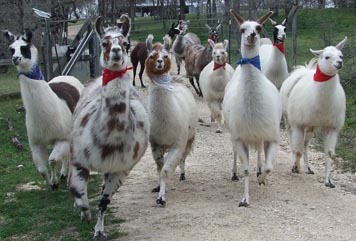
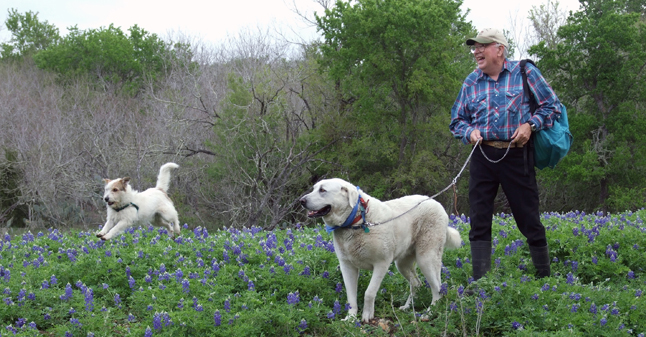
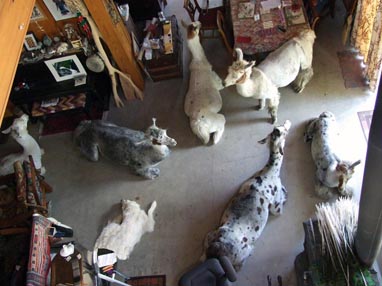
Of course, the Californians didn't know about the secret power of llama beans, which my neighbor provides in abundance. The llama beans, along with cow manure, is the high-octane organic fuel I mix with black gumbo and sandy loam. It is pure Texas crude, all right, but it's what makes the Arbequina branches bend heavy with olives. Later, I learned that the Arbequina is the major oil-producing olive tree of Catalonia, in Northeastern Spain. The region's climatic temperature of 40 degrees Celsius in the summer, and the possibility of a freeze in winter seems to mimic the weather in Eastern Travis County. Back in their prime, it only took a few days for my roughneck uncles to discover whether or not drilling would usher a gusher--or be a dry hole. In contrast, Arbequinas take years sniffing the air and putting down deep roots. When the tree's ready, it'll decide to spurt and squirt, or just drip a trickle. I've learned, after planting my olive grove in Central Texas, that patience is as important as back-breaking labor when wildcatting. There's an old saying: 'plant olive trees for your grandchildren'. But be warned. Unless you enjoy year-in/year-out worries, sweaty equity, heartbreaks in deluges, loss of limbs in droughts, scarred tree trunks from rutting deer or root damage from wild hogs, you better plant petunias. However, if you want the opportunity to see Nature unfold at a leisurely pace, experience shimmering silver-green waves of leaves dancing in the sunlight, go-a-wandering through a grove of trees, clipped and manicured as an English hedgerow, then plant olive trees. As a born again wildcatter, determined to strike Olive Oil on Caracara Farm, I wonder about those California olive experts. They talk like they don't know a Texas Arbequina from a California redwood. Keep ya'll posted. About the Llamas: "Mesquite Bean Llamas" shares a half mile fence with Caracara Farm. Our ten llamas produce large quantities of "llama beans" that we shovel into a tractor bucket and dump over the fence onto Caracara Farm - a win-win situation for both of us. The herd enjoys outings onto less securely fenced parts of our place as shown by the stampede in the photo above. We always shepherd them on these excursions. They are also protected by a large guard dog and a flying guard mutt. During our very hot summers, most of them (still guarded) choose to spend the afternoons kushed on the concrete floor of our airconditioned house.
|
Updated August 16, 2012
©Caracara Farm 2010
Report Web
Problems